The history of microbiology can
be trace back to year 1675 when a man called Anthony Von Leeuweenhoek of
blessed memory, he was born in 1632 and die in 1723, lived in Delhi Holland. He
is a man that sells women cloths, curtain etc. Because he use canoe to cross
river to other nabouring areas to sell his product, when he is on the way going
to market sometime rain will fall and meet him on the way going to market, so
when rain meet him on the way some of his product will be stains. This
condition continues anytime rain meets him when going to the market. He is not
only a cloth seller but also specialized in lens making, he decide to construct
his own microscope. He used the microscope construct by himself to carry out
the experiment.
 |
| Anthony Von Leeuweenhoek |
Anthony Von Leeuweenhoek use rain
stagnant water for the experiment, in the process of the experiment he observed
little animalcules which he called it then, that is protozoa. But work carried
out after him now gives a primary account of microorganism.
He could be called father of
microorganism because on his experiment carried out, he was so careful and cannot
offered of making mistake so because of the scrupulous experiment, he is able
to yield accurate result.
That pave way to today present
day scientist because of the simplify explanation of his experiment. Man called
Barr in year 1836 establishes that, microorganism could be the agent that
causes disease but no comprehension of this assumption. He carried out
experiment, on his experiment he used heat sterilization pin and transmit
disease from infected silkworm to infect with fungi disease to a healthy
silkworm. Even with this clear evidence, the real science of bacteriology
remains obscure till middle nineteenth century. The award of sterilization
could be trace back to man called Louis Pasteur born on 1823 and die on 1895 he
is a French Chemist. With his effort in sterilization of liquid that leads to
today autoclave. His area of specialization was on fermentation, the
substantiate that catabolism of sugar to alcohol was as result of microorganism
acted on the sugar by fermentation process.
He did not stop their but further
to acquire knowledge on isolation and culture of bacteria on the nutrient
medium, he study how those bacteria affect animals as a living organism. But it
was on 1878 he held a paper discussing on how specific microorganism can give
rise to specific disease in the living organism worlds.
When Pasteur study is in
progress, another man called Robert Koch born in 1843 die in 1900, was making a
very large contribution to bacteriology this man was the one that develop the
method of staining and fixing bacteria using aniline dye, on the process of his
research, he discovered tubercle bacillus, he isolated this microorganism,
anthrax bacillus in a pure culture.
This man also discovered vibro
cholerae, microorganism that cause cholera. After these experiments, in year
1881 he publish a document containing method on how to produce pure culture of
bacteria through the cultivation of the bacteria in a solid culture media. He
used meet infusion broth, that he produce by himself and solidified it using
gelatin, and then pour it into a glass plate.
He is also called father of
culturing because his work brought enlightenment to present day culture. But
agar is now been used for gelatin substitution. Is after these worked, a man
called Petris introduce a plate called petri dish.
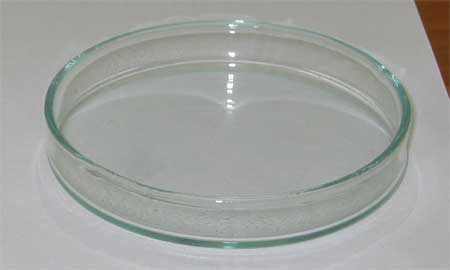 |
| PETRI DISH |
Since then mode of development
has became a fire bridge approach, such in terms of antiseptic and aseptic
which was introduce by Lister. Much knowledge was contributed in term of
increase development of bacteriology. Today with this
knowledge of bacteria, virus, fungus, yeast, etc, has
lead to appropriate terms of microbiology (which are derived from Latin words
micro which mean small, organism which mean life are term which generally used
to refer to the study of microorganism). Above all microbiology can be defined
as a branch of biology that deals with the study of micro organism
Comments
Post a Comment